If you asked most gym-goers to name their supplement stack, you'd hear the usual suspects — protein powder, creatine, pre-workout, maybe some BCAAs.
Magnesium almost never makes the list.
That's a problem, because magnesium is involved in over 300 enzymatic processes in the human body — including muscle contraction, protein synthesis, energy production, nervous system regulation, and sleep. It's not a niche supplement. It's a foundational mineral that a significant portion of the population isn't getting enough of.
And if you're training hard, sweating regularly, and under any kind of stress — which describes most people reading this — your demand for magnesium is higher than average, and your risk of running low is real.
What Magnesium Actually Does
Let's start with why this mineral matters before we get into deficiency and dosing.
Muscle function. Magnesium is required for both muscle contraction and relaxation. Calcium triggers contraction — magnesium enables the release. Without adequate magnesium, muscles can't fully relax, which contributes to cramping, tightness, and the feeling of never fully recovering between sessions. Energy production. ATP — the primary energy currency of your cells — must be bound to magnesium to be biologically active. Every time your body uses energy, magnesium is involved. Low magnesium means compromised energy production at the cellular level. Protein synthesis. Magnesium plays a direct role in the synthesis of proteins, including muscle proteins. This makes it directly relevant to recovery and muscle building — not just general health. Sleep and nervous system regulation. Magnesium activates the parasympathetic nervous system — your rest and recovery mode. It also regulates GABA receptors, which are the primary inhibitory neurotransmitters responsible for calming neural activity. Low magnesium is associated with poor sleep quality, increased anxiety, and difficulty downregulating after stress. Testosterone and hormone regulation. Research has linked adequate magnesium levels to higher free testosterone in active men. The mechanism involves magnesium's role in reducing sex hormone binding globulin — the protein that binds testosterone and makes it unavailable for use.Why So Many People Are Deficient
Estimates vary, but research consistently suggests that a large portion of adults in developed countries don't meet the recommended daily intake for magnesium from diet alone. Some estimates put that figure at over 50%.
Several factors drive this:
Modern soil depletion. Magnesium content in crops has declined significantly over the past several decades due to industrial farming practices. Foods that should be good magnesium sources simply contain less of the mineral than they once did. Processed food dominance. Magnesium is found primarily in whole foods — leafy greens, nuts, seeds, legumes, whole grains. A diet heavy in processed and refined foods is almost always low in magnesium. Sweat losses. Magnesium is lost through sweat. If you're training six days a week and sweating consistently, you're losing meaningful amounts of magnesium that need to be replaced through diet or supplementation. Stress. Cortisol promotes magnesium excretion through the kidneys. The more stress you're under — physical or psychological — the more magnesium you burn through. Alcohol and caffeine. Both increase urinary magnesium excretion. If you're drinking coffee throughout the day, your magnesium losses are higher than someone who isn't.Signs You Might Be Running Low
Magnesium deficiency rarely shows up as an obvious, acute symptom. It's more likely to manifest as a collection of subtle issues that are easy to attribute to other causes:
- Muscle cramps or persistent tightness, especially at night
- Poor sleep quality or difficulty staying asleep
- Fatigue that doesn't resolve with rest
- Irritability or elevated anxiety
- Headaches or migraines
- Constipation
- Difficulty recovering between training sessions
None of these alone confirms deficiency — but if several apply and your diet doesn't include consistent magnesium-rich whole foods, supplementation is worth trying.
Which Form to Take

This is where magnesium gets complicated, because not all forms are equal — and some are nearly useless.
Magnesium glycinate — the form I take and the one I recommend most often. Glycinate is magnesium bound to glycine, an amino acid with its own calming properties. It has excellent absorption, is gentle on the digestive system, and is particularly effective for sleep and stress. This is the default choice for most people. Magnesium malate — bound to malic acid, which is involved in energy production. A good option if fatigue is your primary concern, or if you want to take magnesium earlier in the day without the relaxing effect being a factor. Magnesium threonate — the only form shown to cross the blood-brain barrier effectively. More expensive, but worth considering if cognitive function and brain health are priorities. Emerging research on neurological benefits is interesting. Magnesium citrate — widely available and reasonably well absorbed. Has a laxative effect at higher doses, which makes it useful for constipation but less ideal as a daily performance supplement. Magnesium oxide — the most common form in cheap supplements. Poor absorption, high laxative effect, minimal benefit. Avoid it.Dosing and Timing
The recommended dietary allowance for magnesium is around 400–420mg per day for adult men. For active individuals under regular physical and psychological stress, staying at the higher end of that range makes sense.
Most magnesium glycinate supplements come in 200–400mg capsules. A common starting approach is 200–400mg taken 30–60 minutes before bed.
Taking it at night isn't mandatory, but it aligns well with magnesium's role in sleep and nervous system downregulation. Most people notice improved sleep quality within a week or two — often before they notice anything else.
One caution: very high doses of supplemental magnesium can cause loose stools. Start at a moderate dose and adjust from there.
Food Sources Worth Knowing
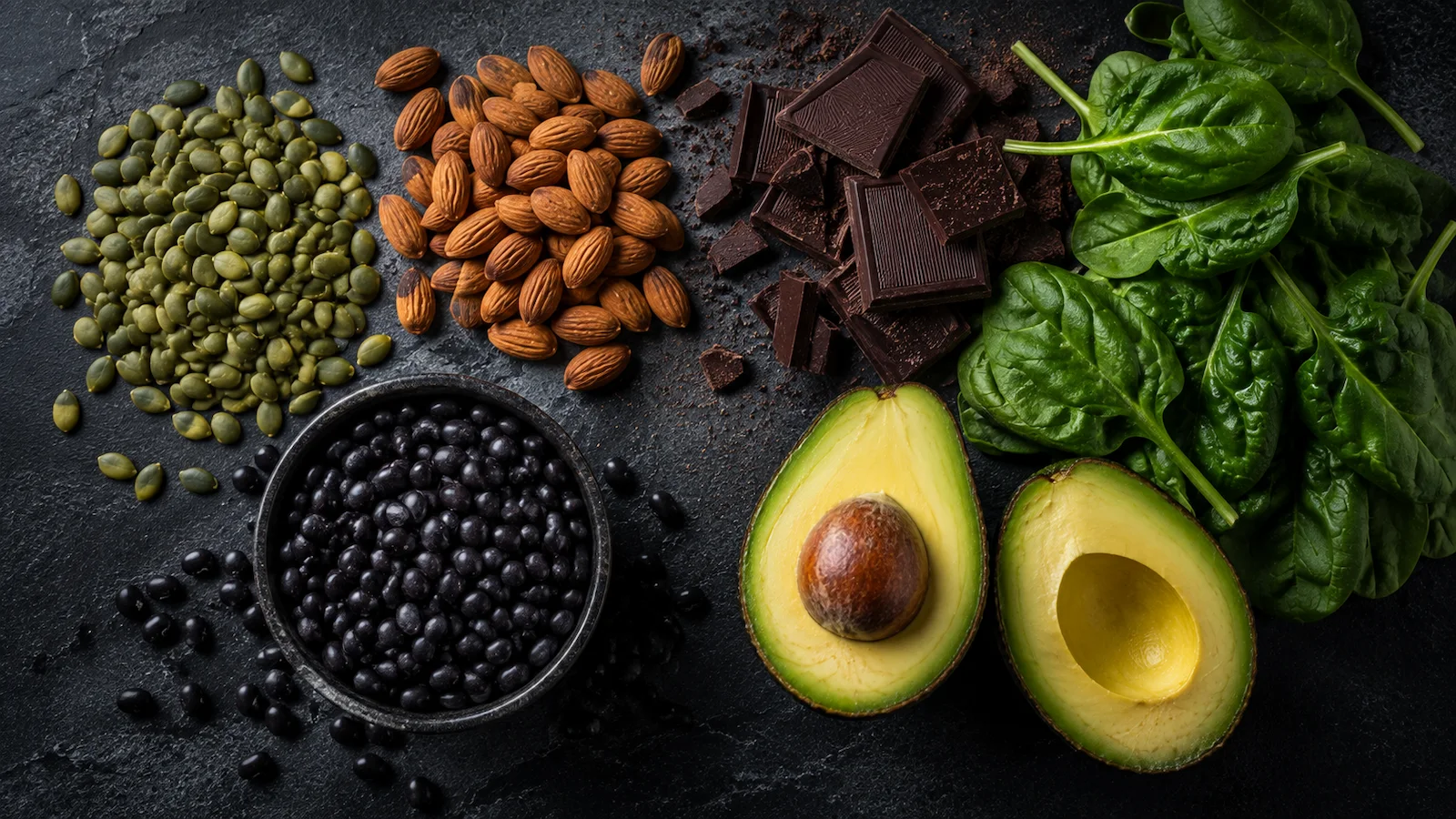
Supplementation fills gaps — it doesn't replace diet. If you want to build your magnesium intake from food first, these are the highest-value sources:
- Pumpkin seeds (1 oz): \~150mg
- Dark chocolate 70%+ (1 oz): \~65mg
- Almonds (1 oz): \~80mg
- Spinach, cooked (½ cup): \~78mg
- Black beans (½ cup): \~60mg
- Avocado (1 medium): \~58mg
- Salmon (3 oz): \~26mg
A diet that consistently includes leafy greens, nuts, seeds, and legumes will get you a reasonable way toward your daily target. But for most people training hard, supplementation makes sense as a reliable top-up.
The Bottom Line
Magnesium isn't a performance supplement in the traditional sense — it's not going to make you feel a surge of energy or pump when you take it. What it does is remove a brake.
When your magnesium levels are adequate, your muscles recover better, your sleep improves, your stress response is more regulated, and your energy production runs more efficiently. You're not adding something — you're removing a limitation that was quietly holding you back.
It's inexpensive, safe for long-term use, and most people who try it notice a real difference within two to four weeks. That's a low bar for something worth adding to your routine.
Trying to figure out which supplements are actually worth taking versus which ones are just marketing? That's exactly the kind of thing I help clients cut through. Let's talk._