Ask ten people how much protein they need and you'll get ten different answers. Ask most doctors and they'll quote you a number that was designed to keep sedentary people from wasting away — not to help a training adult build and maintain muscle.
The standard recommendation of 0.8 grams per kilogram of bodyweight per day is a floor, not a target. It's the minimum to avoid deficiency in a person who doesn't exercise. If you're training seriously, that number is almost meaningless.
Let's talk about what the research actually says.
Why Protein Matters More Than You Think
Protein isn't just a macronutrient. It's the structural raw material your body uses to build and repair virtually every tissue — muscle, connective tissue, enzymes, hormones, immune system components.
When it comes to training, the specific mechanism that matters is muscle protein synthesis — the process by which your body assembles new muscle protein from amino acids after a training stimulus.
For that process to run efficiently, two things need to be true: the training stimulus has to be present, and the amino acid supply has to be adequate. If you're training hard but under-eating protein, you're generating the signal without providing the materials.
The result: slower recovery, less muscle growth, and over time, potential muscle loss — especially as you age.
What the Research Actually Says
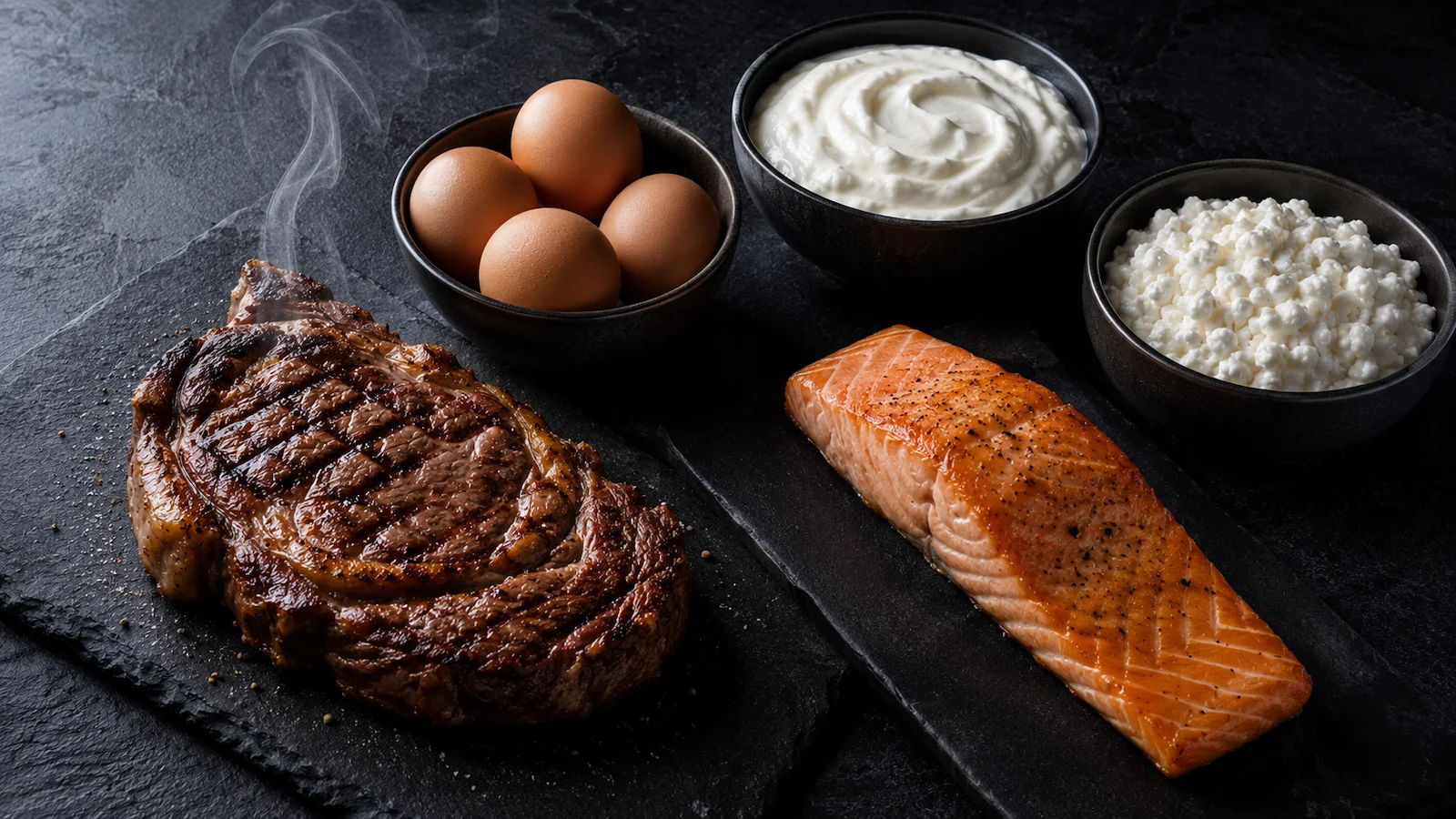
The most comprehensive meta-analyses on protein and muscle growth consistently point to a range of 0.7 to 1 gram per pound of bodyweight per day for active individuals trying to build or maintain muscle mass.
Some research goes higher — particularly for older adults, where protein synthesis efficiency declines with age and higher intakes are needed to produce the same anabolic response. If you're over 40, the case for staying at the higher end of that range is strong.
For a 180 lb person, that's 126–180 grams of protein per day. For a 200 lb person, 140–200 grams.
Most people eating a typical diet — even one that feels like it includes "a lot of protein" — land well below that range when they actually track it.
The Muscle Loss Problem After 40
This deserves its own section because it's underappreciated.
Starting in your late 30s and accelerating through your 40s and beyond, your body becomes progressively less efficient at triggering muscle protein synthesis from a given dose of protein. This phenomenon is called anabolic resistance.
What this means practically: an older adult needs more protein per meal and more protein per day to produce the same muscle-building response as a younger person eating less.
The threshold dose — the minimum amount of protein per meal needed to maximally stimulate muscle protein synthesis — also rises with age. Research suggests that older adults need closer to 40 grams of protein per meal to hit that threshold, versus around 20–25 grams for younger adults.
If you're 40-plus and eating three meals a day with 20–25 grams of protein each, you're likely leaving a significant amount of muscle-building potential on the table at every single meal.
Where Most People Fall Short
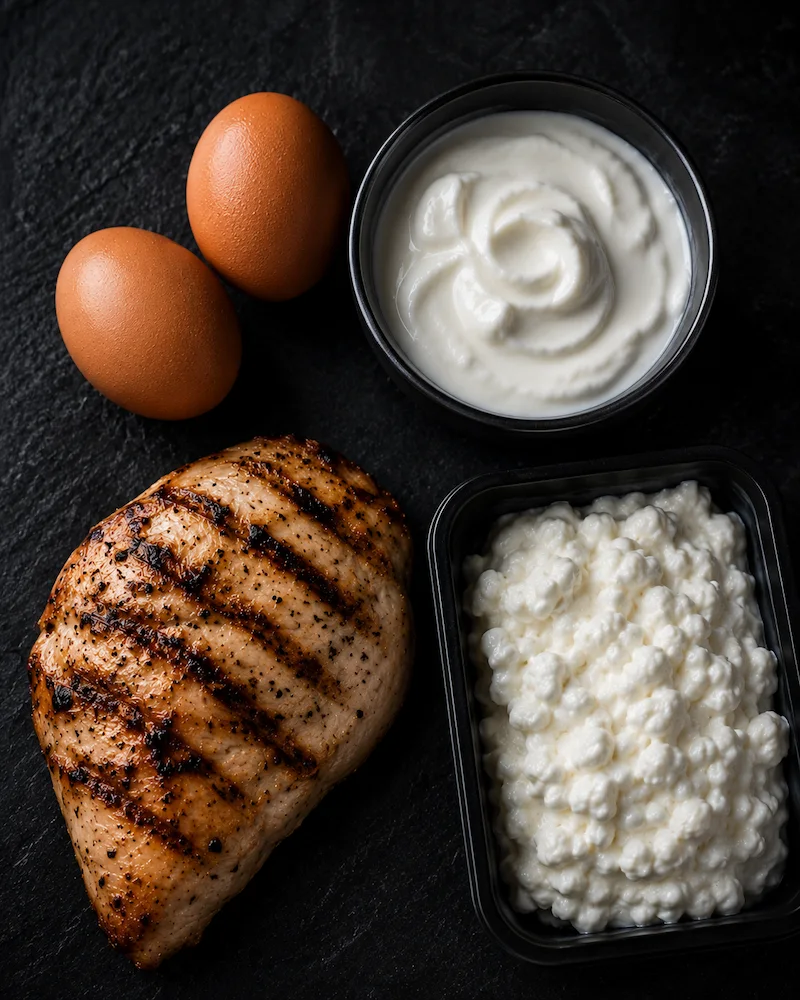
The gap between where people think they are and where they actually are on protein is usually significant. Here's why:
They eyeball instead of track. A "big" chicken breast might feel like 50 grams of protein. It's usually 35–40. Over three meals, that 10-gram-per-meal gap adds up to 30 grams short for the day — every day. They rely too heavily on protein shakes. A single scoop of whey is typically 20–25 grams. That's a useful supplement to whole food sources — not a replacement for them. If your protein strategy is one shake and some chicken at dinner, you're short. They skip breakfast protein. Eggs and toast or a bowl of cereal and fruit is a nearly protein-free morning. If you train in the morning and then eat 10 grams of protein for breakfast, you've missed the most critical post-training window with inadequate substrate. They eat light on rest days. Muscle protein synthesis continues for 24–48 hours after a training session. Your rest day protein intake matters just as much as your training day intake.How to Actually Hit Your Target
Start with a simple daily target. If you weigh 180 lbs, aim for 160–180 grams of protein per day. Build your meals around hitting that number.
Practical anchors:- Greek yogurt (3/4 cup): \~17g
- Cottage cheese (1 cup): \~25g
- Eggs (3 whole): \~18g
- Chicken breast (6 oz cooked): \~50g
- Ground beef 90/10 (6 oz cooked): \~40g
- Canned tuna (1 can): \~25g
- Whey protein (1 scoop): \~22–25g
- Edamame (1 cup): \~17g
Build your meals around two to three high-protein anchors and fill in the rest. If you're consistently hitting your target through whole food sources, a protein shake becomes optional.
Does Protein Timing Matter?
The "anabolic window" — the idea that you must consume protein within 30 minutes of training or the gains disappear — has been largely overstated by supplement marketing.
What the research actually shows: total daily protein intake is the primary driver. Timing is secondary.
That said, there are practical reasons to get protein in reasonably close to training — particularly post-workout, when muscle protein synthesis rates are elevated. Not because missing that window ruins everything, but because it's a convenient time when your body is primed to use it.
Don't stress about the clock. Stress about the total.
The Bottom Line
Hit your daily protein target. Stay at the higher end of the range if you're over 40. Build meals around protein anchors rather than treating protein as an afterthought.
Track it for two weeks — not forever, just long enough to calibrate your eye. Most people find the process revealing. The gap between perceived intake and actual intake is almost always larger than expected.
Protein is the one macronutrient where more, within reason, is almost always better for a training adult. Treat it accordingly.
Need help building a nutrition approach that actually supports your training? Let's work together._